The Entra Connect Deadline Moved. Your Server Didn't.
By Raymond Todd Blackwood, President of QuickLaunch
At the end of September, higher-ed IT had a deadline on the calendar that most campuses never circled. Microsoft had published it for more than a year: upgrade the engine that synchronizes your on-premises Active Directory into Entra ID, or, in the words of Microsoft's own documentation, all synchronization services fail. The day arrived. That afternoon, Microsoft edited the page and moved the date to next spring. No headlines, no announcement, no panicked listserv threads.
I spent part of this week looking for the wreckage, and I found silence instead. Not one public report of a campus whose Entra Connect sync stopped. The reason is not that every campus upgraded in time. The reason is that the Entra Connect deadline moved, on the day it was due, in a documentation edit almost nobody saw. If you run hybrid identity, that should read as a warning, not a reprieve, because the plan you built against Microsoft's page changed underneath you, and the page did not tell you it had.
So let me answer the people who typed "Entra Connect deadline" into a search bar this month. Your sync did not stop at the end of September. The deadline now falls next spring, and it asks for more than it did: your sync server has to reach Microsoft's new minimum version and switch to application-based authentication, or synchronization stops on that date. Meanwhile, the version a year of reminders taught everyone to memorize loses support this month. The check takes minutes: confirm the installed version on the sync server, upgrade to the latest build from the Microsoft Entra admin center, and put the authentication change on someone's calendar with a name next to it.
Three weeks ago I wrote that your PowerShell scripts are debt and Microsoft is calling them in. Last week I promised you a column on privileged access, and that column is still coming. This one cut the line, because the bill I described in September just had its due date rewritten, and almost nobody saw the edit.
A Dead Sync Sounds Exactly Like a Quiet Week
The reason this deadline deserves your attention, wherever it lands, is what a stopped sync looks like from inside the building. Directory sync is plumbing for changes, not for sessions. The password hashes it already carried to the cloud keep authenticating. Single sign-on keeps answering. Email keeps arriving. Every credential that existed before the stoppage goes right on working, which means the first day of a dead sync looks like a normal day. So does the first week.
What stops moving is change itself. The joiners. The password resets. The leavers. A new hire gets an Active Directory account that never appears in Microsoft 365. A student resets a password that the cloud never learns. And the one that should keep you up at night: a separation gets processed in your directory, and the disable never propagates. The account you turned off on campus stays alive in the cloud, still holding mail, files, and whatever else it was entitled to. I spent a column this fall on what should happen when people leave . A silent sync failure un-ships every one of those deprovisioning decisions without telling you.
It gets better, and by better I mean worse. Microsoft's hardening notice says that out-of-date Connect Health monitoring agents degrade too, and the casualties include the specific alerts that report a stopped password-hash sync and a halted export to Entra ID. Translate that out of vendor prose: the smoke detector and the furnace can fail in the same week, for the same reason. The institutions most likely to be running a stale sync engine are precisely the ones running the stale monitoring agent that would have announced it.
The Entra Connect Deadline Moved on the Day It Was Due
In September I printed this deadline as a cliff, because a cliff is what Microsoft's page described. I owe you the update, with the receipts. The documentation lives in public version control, so every change is right there in the diff. The day before the deadline, Microsoft raised the minimum version on its security guidance page. On the day itself, it moved the date on the hardening page from the end of September to next April. The next morning, it raised the minimum version on that page too. Three edits in three days, and the build everyone had memorized as the safe floor stopped being the floor at all.
And the old floor was never a resting place anyway. The version everyone memorized loses support entirely just days after this column publishes, because Microsoft's standing policy retires every release of the sync engine twelve months after its successor ships. Several versions retired this year alone. There is no version of this software you get to install and forget. The treadmill is the product.
I wrote in September that a deprecation notice does not forward itself to a script. I have to extend the point: the notice can also rewrite itself after you read it. A campus tracking this by hand, on a sticky note or in the back of an identity engineer's head, had both the number and the date change underneath them in the same seventy-two hours. That is not a failure of diligence. That is what it looks like when a vendor's maintenance schedule becomes your maintenance schedule and nobody on your side owns the calendar.
The Skeptics Were Right About the Date
Now the strongest case against this column, argued the way its best advocate would argue it, because you have heard me say that credibility is the brand.
The careful readers in the admin community said all along that the real hard stop, the one Microsoft labels mandatory, lands next spring. Microsoft now agrees with them, in writing. It has also been auto-upgrading these sync servers since 2023, and its documentation says plainly that auto-upgraded customers are not affected by this service change. A fair skeptic looks at all that and says the September date was a fire drill, the fleet mostly upgraded itself, and columns like this one are vendor-manufactured urgency.
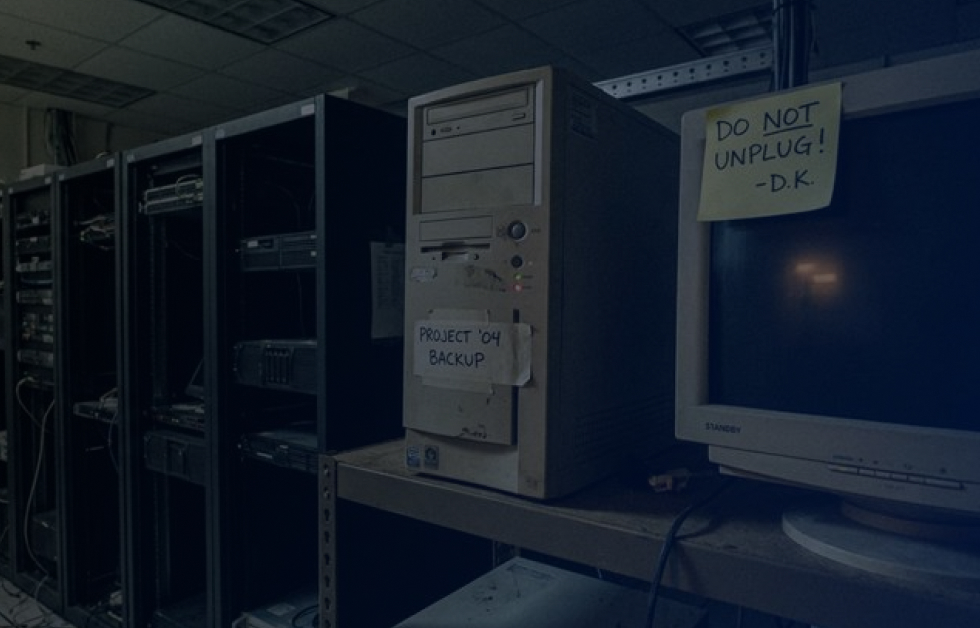
On the date, the skeptics were right, and I said otherwise in September. Here is what the rest of the argument quietly assumes: that your server is average. Auto-upgrade only protects the machines it reaches. The population still exposed is self-selected, the servers where someone opted out of auto-upgrade years ago, or where the upgrade failed silently, or where the build is so old that auto-upgrade itself no longer functions. On a campus, you know that machine. It was stood up during a different administration. It got excluded from patching because it was fragile. The person who understood it took the counteroffer I wrote about in September. The census says the fleet is fine, and the census never counted the snowflake under the desk. Averages do not protect outliers. They hide them.
And a deadline that moves is not a deadline that went away. Next spring's version asks for something an installer cannot do alone: a change in how the sync engine authenticates to the cloud, which is a decision a human has to make. I have no evidence of a campus harmed by any of this yet, and with the date moved, nobody had to squeak through in September. But "probably fine" is a feeling, not a control, and the entire cost of replacing the feeling with a fact is reading a version number off one server this afternoon.
The Next Deadlines Are Already in Print
The question now is what breaks next, and the answer is a schedule, not a mystery. The exact dates and build numbers live in the FAQ below, where they can age without staling the argument. The shape is what you should carry.
First, the floor everyone memorized retires almost immediately; if your team sprinted to that version last month, you are days from being out of support and already below the new minimum. The target is the latest build, not the floor. Second, before the year is out, Exchange Online flips the default off for sending mail with a plain username and password. Walk your campus and count what still sends that way: the scan-to-email copiers, the library notice robot, the ERP job that mails purchase orders. Those are identity automations too, and the re-enable toggle is a standing exception, and I wrote in August about how exceptions age into ghosts. Third, next spring brings the deadline that moved, the one Microsoft actually labels mandatory, and it demands more than an installer run: the sync engine has to change how it authenticates to the cloud, which is a configuration decision a human makes, not a patch that lands by itself.
Behind all of it, Microsoft is moving hybrid customers to Entra Cloud Sync, the self-updating replacement, in waves, simplest configurations first, with no retirement date announced for the old engine. The feature gaps that made campuses wait are closing; it now syncs devices, though very large groups and advanced attribute filtering still favor the old engine. A queue is not a deadline. It is, however, a direction.
Our stake, stated plainly. QuickLaunch does not replace Entra Connect, and I will not pretend otherwise; the hop from your directory to Microsoft's cloud is Microsoft's plumbing, and the fix for an out-of-date sync engine is an upgrade, not a purchase order. Our lane is the half of the lifecycle that was never Microsoft's job: getting the right accounts into your directory in the first place and shutting them off the moment the system of record says so. On our platform, an enrollment change is an identity event, and real-time directory sync reads the system of record directly, propagates disabled records automatically, and logs every change for audit, with a connector catalog covering the long tail. What no product of ours or anyone else's can do is name the human who owns your sync server and its calendar. That decision was the subject of the September column, and it is still the whole game.
So this week: read the version number off the sync server. Confirm a sync cycle actually completed, today, not the day someone last checked. Trace one separation end to end and prove the disable reached the cloud. Then put a name and a renewal date next to that server the way you would for any other contract, because that is what it is, a contract with a vendor's treadmill, and it renews whether or not anyone on your campus is watching. The campus that learns from this afternoon's version check that it sits below the new floor has until spring to fix it. The unlucky one learns it the morning after the new date, from a help desk queue full of password resets that never reached the cloud, or from the leaver who noticed their account still worked. A deadline that moves teaches the wrong lesson, that deadlines move. Meet the next one on purpose. Next week: self-healing agents inside workflow design, and when a human still belongs in the loop. See you Wednesday.
Take the Next Step
Primary: Run the Microsoft Deadline Check: sixteen questions, five minutes, anonymous, scored in your browser, no email required. It returns your next break date and a plan. For the sync engine specifically, start with the guide to the new Entra Connect Sync deadline.
Secondary: Follow the weekly column on the QuickLaunch blog. Next week: self-healing agents, and when humans need to be in the loop.
FAQ
Did Entra Connect Sync stop working after September 30, 2026?
No. On September 30, 2026, Microsoft edited its Entra Connect Sync hardening guidance and moved the deadline from September 30, 2026 to April 7, 2027, so servers below the old minimum version did not stop syncing that day. The guidance now says that servers below the minimum version will have all synchronization services fail between April 7, 2027 and when they upgrade. A hybrid campus should still verify its own state: check the installed Microsoft Entra Connect Sync version, confirm the last successful sync cycle, and plan the upgrade and the authentication change before the new date.
What is the minimum Entra Connect Sync version right now?
Version 2.6.84.0, with application-based authentication configured, by April 7, 2027. Microsoft raised the minimum from 2.5.79.0 to 2.6.84.0 on its security hardening page on September 29, 2026 and on its hardening guidance page on October 1, 2026. Version 2.5.79.0 loses support on October 23, 2026 under Microsoft's rolling policy, which retires every Entra Connect Sync 2.x release twelve months after its successor ships. Because 2.6.84.0 has a documented upgrade failure (error 0xE0474352) with existing ADSync databases, the practical target is the latest build published in Microsoft's version release history, currently 2.6.92.0.
Which Microsoft deadlines should campus IT track through 2027?
Four are published now. October 23, 2026: Entra Connect Sync 2.5.79.0 loses support. End of December 2026: Exchange Online disables SMTP AUTH Basic Authentication by default for existing tenants (administrators can still enable it if needed, and Microsoft will announce the final removal date in the second half of 2027). April 7, 2027: Entra Connect Sync must run version 2.6.84.0 or later with application-based authentication configured, or synchronization services stop working. Ongoing: Microsoft Entra Connect Health agents below 4.5.2466.0 lose a subset of alerts, including the alert that reports password hash synchronization has stopped.
Does QuickLaunch replace Microsoft Entra Connect?
No. Microsoft Entra Connect Sync and Entra Cloud Sync carry identities from on-premises Active Directory into Microsoft Entra ID, and QuickLaunch does not replace that hop. QuickLaunch handles the identity lifecycle upstream and around it: SIS-driven account creation, organizational-unit placement, group membership, real-time directory sync from sources like Active Directory, XML, CSV, SQL, and REST APIs, and event-driven deprovisioning that propagates disabled records automatically with every change logged for audit. Institutions run QuickLaunch alongside Microsoft's sync tooling, not instead of it.
References
- Hardening updates for Microsoft Entra Connect Sync - Microsoft Learn.
- Extend deadline from 30/sept/2026 to 7/april/2027 (commit 2d7c54f, September 30, 2026) - MicrosoftDocs/entra-docs, GitHub.
- Change from 2.5.79.0 to 2.6.84.0 (commit 99ebcb8, October 1, 2026) - MicrosoftDocs/entra-docs, GitHub.
- Security hardening to the autoupgrade process for Microsoft Entra Connect and Microsoft Entra Connect Health - Microsoft Learn.
- Update Entra Connect minimum version (commit 369e14b, September 29, 2026) - MicrosoftDocs/entra-docs, GitHub.
- Microsoft Entra Connect: Version release history - Microsoft Learn.
- Entra Connect Sync deadline: April 7, 2027, not Sept 30 (October 5, 2026 correction) - Pro IT NW.
- Entra Connect: the date that stops your sync, and the date that just emails you - Everywan.
- Updated Exchange Online SMTP AUTH Basic Authentication Deprecation Timeline - Exchange Team Blog, Microsoft Tech Community.
- What is Microsoft Entra Cloud Sync? - Microsoft Learn.
- Migrate from Microsoft Entra Connect to Cloud Sync: Decision Guide - Microsoft Learn. https://learn.microsoft.com/en-us/entra/identity/hybrid/cloud-sync/connect-to-cloud-sync-decision-guide
- What's new in Microsoft Entra: Upcoming change, migrate from Microsoft Entra Connect Sync to Microsoft Entra Cloud Sync (April 2026) - Microsoft Learn.
- QuickLaunch Release Notes - QuickLaunch.
Raymond Todd Blackwood is the President of QuickLaunch and writes about identity, agentic AI, and the messy reality of higher-ed IT. #ItsExistential