A University Just Got Breached Through a Stale AI Service Account. The Ghost Account Problem Just Grew Legs.
Somewhere on a campus this spring, a practitioner I have never met stood up an AI agent to help students with a routine task. Financial aid appeals, maybe. Course registration questions. She wired it to the student record system, gave it a service account, and pushed it to production. The launch went well. The agent worked. People praised it in a status meeting.
Then she moved on to the next project, the way every overcommitted higher-ed IT person moves on to the next project.
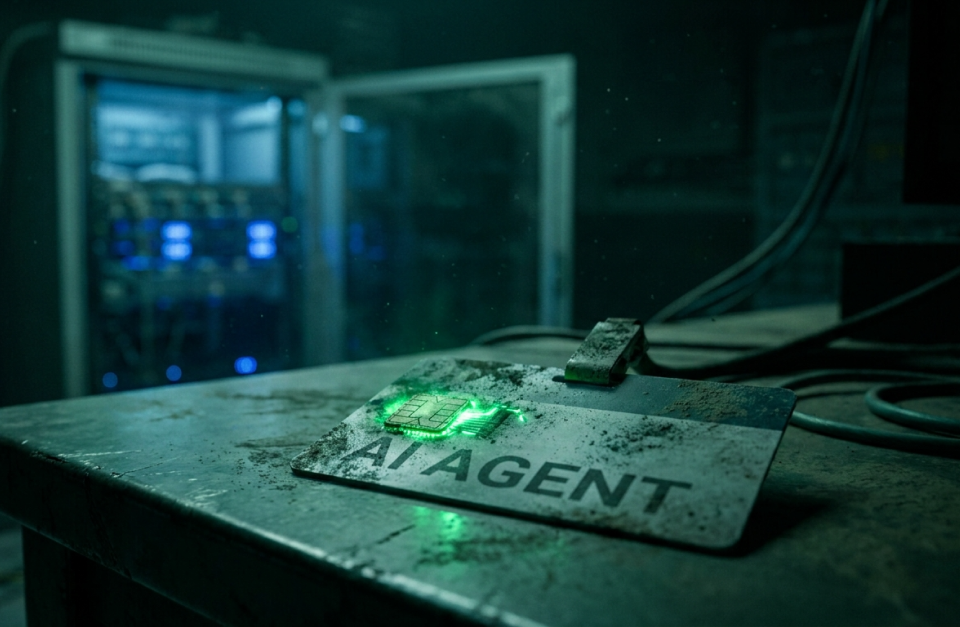
The service account she stood up stayed exactly where she left it. Over-provisioned. Stale credentials. No owner of record. No expiration. No review cadence. It sat there for months, quietly holding keys to data it stopped needing the day the pilot ended.
Then somebody else found it.
According to threat reporting on the 2026 higher-ed landscape, an autonomous AI service account at a major university was compromised this year, used as a foothold for lateral movement, and rode out of the institution carrying student, faculty, and research records. The compromise was not detected until after the account was eventually revoked. The pattern lines up with the broader sector trend documented by Campus Technology, UberEther, and Blackbaud: campuses deploying AI agents are treating them as temporary infrastructure rather than persistent identities, and inheriting the same ghost-account failure mode that has burned higher-ed identity programs for two decades.
I made a prediction last year, on record, that AI identities would cause major harm at two or more high-profile institutions within 12 to 18 months. I am not celebrating that receipt arriving. A university got breached. Students had their data taken. The practitioner I described above is real, somewhere, and she is having the worst quarter of her career.
The Failure Mode Is Not New. The Blast Radius Is.
What happened here is the oldest story in identity. Stale credential. Over-provisioned account. Nobody watching. The four states we have been documenting on the human side for years, Manual, Delayed, Forgotten, Orphaned, mapped cleanly onto a non-human identity and produced a breach.
A CIO reading this in a Tuesday budget meeting does not need a protocol explainer. The CIO needs the structural read. The structural read is: every assumption your institution made about service accounts in 2018 just got inherited by your AI agents in 2026, and the speed and access scope of those agents makes the old assumptions actively dangerous.
A human ghost account is bad. A human ghost account holds the access of one person, usually scoped to that person's role, often boring enough that an attacker has to do real work to make it useful. An AI agent ghost account is different. The agent was built to do work autonomously, at machine speed, across multiple systems. It was provisioned for breadth on purpose. When an attacker gets that account, they inherit the breadth.
That is not a hypothetical anymore. That is a 2026 case study.
Okta and Saviynt Shipped the Tooling. They Did Not Ship the Fit.
The vendor ecosystem saw this coming. In May, Okta announced a non-human identity platform with explicit "for AI Agents" modules covering workload identity federation, certificate-based authentication, automated credential rotation, and policy-as-code governance for service accounts, tokens, and agents. Saviynt shipped the next generation of its Identity Security Posture Management for non-human identities, with AI-driven risk scoring, automated remediation, and required human-owner tagging for every machine identity across cloud environments.
I have no quarrel with what they shipped. Both products are real. Both are answering the question the breach data is asking.
The quarrel I have is with what comes next on a higher-ed campus. Both platforms were designed around the corporate-IT lifecycle. The agent governance they ship was built for the Kubernetes-and-multi-cloud enterprise, not for the financial-aid bot that touches Banner, the advising agent that reads the student information system, the tutoring assistant that writes back to Canvas. Those campus agents sit at the intersection of FERPA, the student lifecycle, and a system of record that may be on a 25-year migration queue to the cloud.
A workload identity federation module that assumes a modern cloud-native estate does not automatically translate to a Banner integration running on infrastructure that predates the iPhone. Capability is not the same as fit. The tools exist. The how-to-implement for the actual campus stack is still left to the institution to figure out. That has been my Prediction #3 since I started this column, and the May product announcements did not move the dial on it.
If Your Access Reviews Do Not Include Agents, Your Governance Program Is Already Incomplete
SailPoint extended its Machine Identity Security module to cover risk-based scoring, continuous monitoring, and least-privilege enforcement for AI agents across hybrid environments. Saviynt's Identity Governance app for ServiceNow reached general availability in April, adding access recommendations, trust scoring, and just-in-time privileged access for human and non-human identities in one interface. Both vendors are marketing these capabilities directly at higher education.
Here is the budget-meeting question. Your institution runs quarterly access reviews. You know how that actually goes. Two weeks of emailing managers. A spreadsheet nobody fully trusts. A rubber-stamp approval rate that would embarrass an auditor if anyone asked. That is your *human* access review program.
Now add machine accounts, application programming interface tokens, and active AI agents to the certification scope. Same staff. Same calendar. Same email-the-manager workflow.
The honest answer is that buying a new module does not solve the capacity problem. The sequence matters. The institutions that have not yet cleaned up their human lifecycle governance are not going to leapfrog into agent governance by writing a check. They are going to extend a broken process to a larger population and call it modernization. That is the Prediction #2 scenario playing out in real time: ghost accounts unresolved in human form at smaller institutions, and now the agent governance bill is arriving at the same address.
The fix is sequence, not platform. Clean up the human lifecycle. Build the governance muscle. Then extend it to agents with confidence that the certification process is something more than a forwarded email.
Self-Revoking Permissions Are the Architectural Floor, Not a Future Feature
Here is the one thing I want every CIO reading this to take back to the table. When your enrollment assistant finishes helping a student with a financial aid appeal, does it still have access to the student record database?
Under the service-account model most campuses inherited from corporate IT, the answer is yes, indefinitely, until someone manually revokes it. The industry-wide average detection window for a credential compromise is 241 days. Functionally, the answer is yes, forever.
Self-revoking, task-scoped permissions invert that. The agent gets a key. It does the work. The key evaporates. Microsoft's Azure AI Foundry documentation describes the pattern. The non-human-identity deployment guidance published this spring by the NHIMG 2026 Deployment Guide documents the same architecture. Cryptographically-bound agent identities, time-bound permissions, policy updates that apply at runtime without redeploying agent code.
This is not a compliance nicety. This is the architectural answer to the breach that just happened. The institution that wires its agentic workflows this way today is building on the right floor. The institution that wires its agents the way it wired its service accounts in 2018 is building the next breach disclosure.
At DBNR.ai we have been building agent-to-agent contracts with this pattern baked in for the last year. It is not theoretical. It is shippable. It is appropriate for higher-ed deployments running against legacy systems of record because the time-bound scoping is enforced at the agent contract layer, not at the underlying application.
Write Your Policy In Outcomes, Not Vendor Protocols
A quick word about standards, because the engineers in the room are going to ask. The Internet Engineering Task Force has multiple active drafts shaping how AI agent authorization will eventually be standardized. They are working drafts. Not ratified. Every non-human identity platform shipping in 2026 is shipping ahead of the standard, which means each vendor is interpreting the agent delegation problem its own way.
The CIO read on this is not "go read the drafts." The CIO read is this: any governance policy you write today that names a specific vendor protocol is going to need rewriting when the standards land. The SAML-to-OpenID Connect transition a decade ago taught us what that costs. Write your AI agent governance policy in outcomes and principles. Who owns the agent. How long permissions live. What data the agent can touch. Who reviews the agent quarterly. Those statements survive a standards shift. Vendor-specific protocol statements do not.
Ray's Corner
I made Prediction #4 in public, on record, and named a timeframe. The receipt arrived. I am not celebrating that. A university got breached. Real people had their data taken because somebody stood up an AI service account, gave it too much access, forgot about it, and never asked who held the key.
What I keep thinking about this week is the practitioner who built that agent. She almost certainly knew the account was over-provisioned. She probably raised it once, got a *we'll revisit after launch*, and then the launch happened and the revisit never came. Project closed in the ticketing system. Win logged in the status report. The account she flagged still sitting there, six months later, holding keys.
The human in the loop who is supposed to catch this is still the human in the loop. We have not automated our way out of the accountability gap. We have just moved it one layer deeper into the stack, where it is harder to see and more expensive when it fails. AI agents did not create this failure mode. We did, twenty years ago, when we decided service accounts were infrastructure instead of identities. The agents just made the consequence faster.
The locksmith question I keep asking has the same shape it has always had. Who holds the keys? When the lock changes, who has the new key? When the agent finishes its job, who takes the key back?
In the breach that just happened, the answer to all three was effectively nobody. Which meant the attacker did.
Do not let that be your campus next quarter.
References
- 2026 Cybersecurity Trends to Watch in Higher Education - Campus Technology. https://campustechnology.com/articles/2026/01/29/2026-cybersecurity-trends-to-watch-in-higher-education.aspx
- 2026 State of Identity Cybersecurity in Higher Education - UberEther. https://uberether.com/2026-state-of-identity-cybersecurity-in-higher-education/
- Top Cybersecurity Risks Facing Educational Institutions 2026 - Blackbaud. https://blog.blackbaud.com/top-cybersecurity-risks-facing-educational-institutions-2026/
- Non-Human Identity Security with Identity Security Posture Management - Saviynt. https://saviynt.com/blog/non-human-identity-security-with-identity-security-posture-management
- What Is the Non-Human Identity Lifecycle - Okta. https://www.okta.com/en-sg/identity-101/what-is-the-non-human-identity-lifecycle
- Securing Machines: Non-Human Identity Security - SailPoint. https://www.sailpoint.com/blog/securing-machines-non-human-identity-security
- Identity Governance app for ServiceNow - Saviynt. https://saviynt.com/blog/identity-governance-servicenow
- Building High-Performance Agentic Systems - Microsoft Tech Community. https://techcommunity.microsoft.com/blog/azuredevcommunityblog/building-high-performance-agentic-systems/4497391
- AI Agent Identity Security: The 2026 Deployment Guide - NHIMG. https://nhimg.org/wp-content/uploads/2026/03/AI-Agent-Identity-Security-The-2026-Deployment-Guide.pdf
Take the Next Step
- Download the QuickLaunch AI Agent Inventory Tracker - the practical workbook for inventorying every AI agent on your campus. Owner-of-record fields. Permission-scope columns. Quarterly review cadence built in. If your access reviews do not include agents yet, this is where you start.
- Subscribe to the QuickLaunch column for weekly identity and AI governance analysis written for higher-ed CIOs
Raymond Todd Blackwood is the President of QuickLaunch and writes about identity, agentic AI, and the messy reality of higher-ed IT. #ItsExistential